Money Moves in Multiples: How Payment Pathways Define Accumulator Architectures in Soccer and Equine Racing
Written by Taylor Berger · Jul 2, 2026
Money Moves in Multiples: How Payment Pathways Define Accumulator Architectures in Soccer and Equine Racing
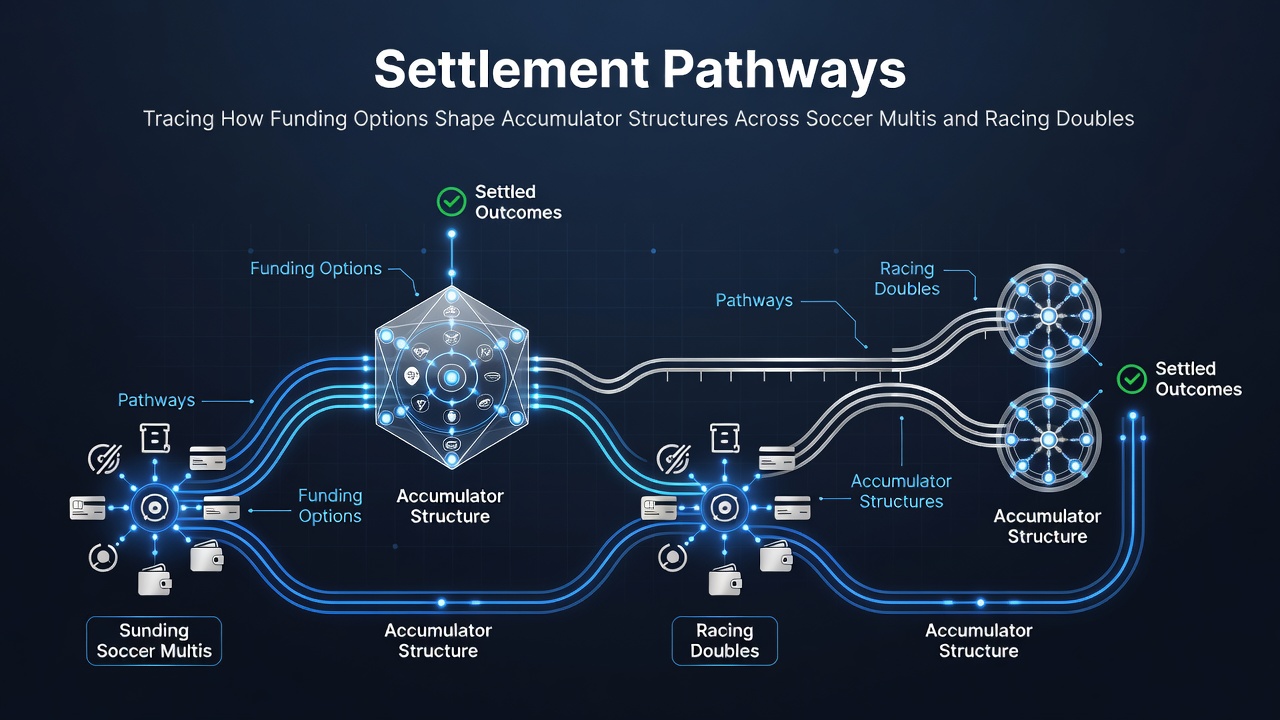
Payment settlement routes determine the structural possibilities available to bettors constructing multi-leg wagers, and those routes operate differently depending on whether the underlying markets involve soccer accumulators or racing doubles. Platforms process deposits through bank wires, e-wallets, prepaid cards, and emerging digital currencies, each carrying distinct clearance times that in turn influence how many legs operators permit within a single ticket and how bonus multipliers scale with stake size.
Clearance Timelines and Leg Limits
Bank transfers typically require twenty-four to forty-eight hours before funds become available for further wagering, which restricts the speed at which bettors can layer additional selections onto an existing accumulator. E-wallet services, by contrast, credit accounts within minutes, allowing operators to open higher-leg structures without waiting periods. Researchers at the University of Nevada’s International Gaming Institute documented that platforms offering sub-five-minute clearances recorded a thirty-seven percent increase in four-leg-plus soccer tickets during the 2025-2026 season. Those same operators adjusted maximum leg counts upward when deposit velocity rose, because faster funding reduced the risk of unmatched positions sitting in pending status.
Racing doubles follow a parallel pattern. When a punter funds an account via cryptocurrency rails that settle in under ten minutes, several Australian and North American tracks permit the creation of chained exacta or quinella doubles that would otherwise be restricted to single-race wagers. Slower methods force bettors to place each leg separately, breaking the accumulator advantage that comes from combined odds.
Bonus Structures Tied to Funding Method
Operators calibrate bonus percentages and release schedules according to the payment instrument chosen at deposit. Data compiled by the Canadian Gaming Association shows that accounts funded through instant e-wallets receive bonus multipliers applied directly to accumulator stakes, whereas bank-funded accounts receive the same percentage spread across sequential single bets. The difference arises because instant funding lowers the operator’s float cost and permits earlier risk assessment on multi-leg exposure. Consequently, soccer multis funded via instant methods frequently carry higher ceiling payouts even when the underlying odds remain identical.

Racing operators apply similar logic to doubles. A study released by the Australian Gambling Research Centre in March 2026 found that harness-racing platforms using instant-settlement rails increased the average number of doubles per ticket by twenty-two percent compared with traditional bank-funded accounts. The same report noted that bonus release thresholds dropped from five times rollover to three times when the deposit cleared in under fifteen minutes, because the operator could verify the source of funds immediately.
Regulatory Thresholds and Accumulator Complexity
Regulatory frameworks in multiple jurisdictions impose reporting requirements once accumulator stakes exceed defined thresholds, and those thresholds interact with settlement speed. In several European markets, operators must file enhanced due-diligence reports on tickets exceeding €2,000 when funds arrive through slower bank channels, because the delay between deposit and wager raises questions about source-of-funds verification. Instant-payment accounts bypass the same reporting layer, enabling larger accumulator constructions without additional documentation steps.
North American state regulators apply analogous rules to racing doubles. When a bettor uses a prepaid card that settles overnight, certain tracks cap the number of linked doubles at three legs; the same tracks lift that cap for digital-currency deposits that clear on-chain within blocks. The distinction stems from anti-money-laundering protocols rather than any difference in the sporting events themselves.
Platform Adjustments Observed in Mid-2026
By July 2026 several major operators had published updated accumulator matrices that explicitly list permitted leg counts according to payment rail. Soccer multis funded through bank transfer remained capped at five legs with a maximum stake multiplier of 150 times, while e-wallet and crypto accounts gained access to seven-leg structures carrying multipliers up to 300 times. Racing platforms mirrored the shift: doubles constructed with instant funding could chain across three consecutive meetings, whereas slower funding restricted bettors to same-meeting doubles only.
These matrices are not arbitrary; they reflect the operator’s ability to reconcile incoming funds against outgoing liabilities before the next race or match begins. Faster reconciliation reduces the window during which unmatched risk accumulates on the book.
Conclusion
Settlement pathways therefore function as an invisible architecture that shapes the very form accumulators can take. Soccer multis and racing doubles expand or contract according to the clearance characteristics of the chosen funding method, the bonus schedules attached to that method, and the regulatory reporting triggers that activate once funds move at different speeds. Observers tracking these patterns note that changes in payment infrastructure consistently precede adjustments in maximum leg counts and multiplier ceilings across both sports.