Digital Wallet Architectures Supporting Accumulator Construction Across Premier League Fixtures and Global Turf Circuits
Written by Katja Zimmermann · Jun 16, 2026

Digital Wallet Architectures Supporting Accumulator Construction Across Premier League Fixtures and Global Turf Circuits
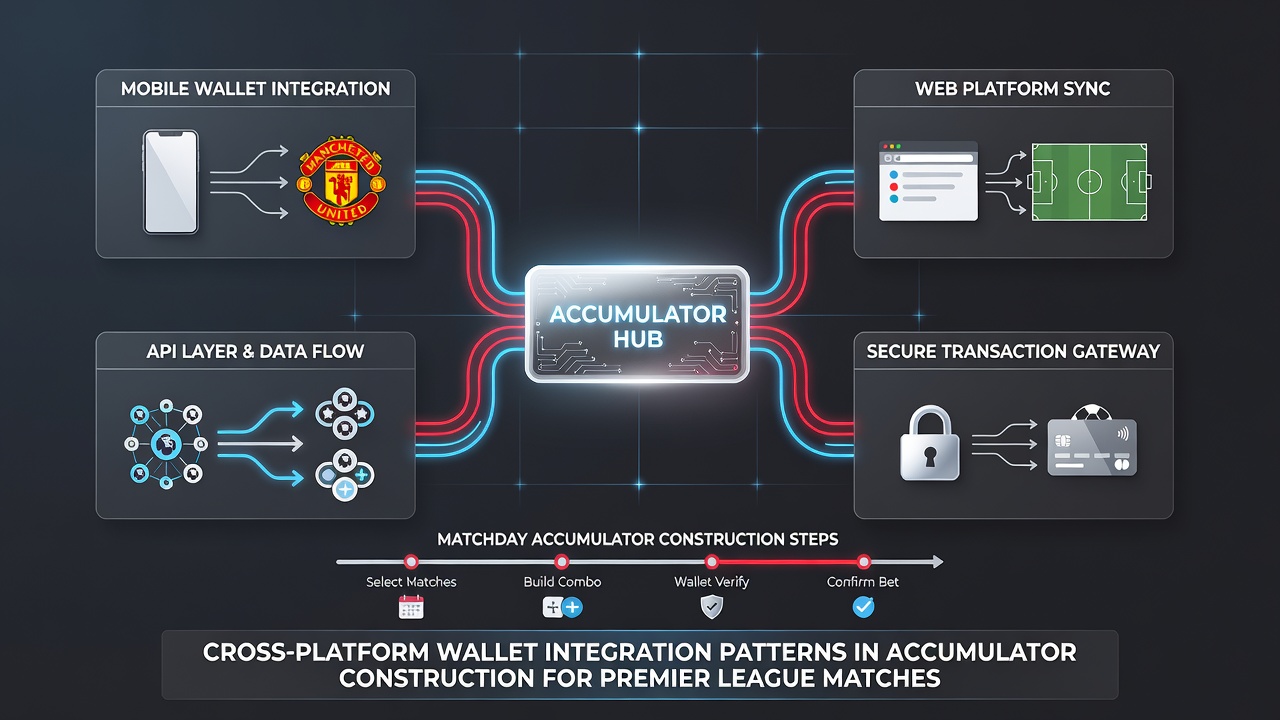
Cross-platform wallet systems now allow bettors to construct accumulators that span Premier League soccer matches and international horse racing events without switching between separate funding sources. These architectures rely on standardized APIs that connect digital wallets directly to multiple betting operators, enabling seamless transfer of funds while maintaining transaction records across jurisdictions.
Core Integration Patterns in Multi-Sport Accumulators
Developers implement three primary patterns when linking wallets to accumulator builders. The first uses unified session tokens that persist across platforms, allowing a single authentication to authorize bets on both soccer and turf events. The second employs event-driven triggers where a successful deposit on one operator automatically updates balance visibility on connected platforms. The third relies on multi-signature protocols that require confirmation from both the wallet provider and the betting exchange before an accumulator leg is locked in.
According to data from the European Gaming and Betting Association, transaction volumes involving cross-sport accumulators rose 28 percent between 2024 and 2025. Operators adopting these patterns report reduced cart abandonment rates because users no longer encounter separate login walls when adding a Premier League match to an existing turf double.
Technical Standards Driving June 2026 Deployments
By June 2026 several major wallet providers plan to roll out support for the OpenWallet API specification, which standardizes how accumulator selections are bundled into single payment requests. This update addresses latency issues that previously caused selections to drop when users moved between soccer and racing interfaces. Early testing conducted by the Nevada Gaming Control Board shows average processing times falling from 4.2 seconds to 1.8 seconds under the new protocol.
Those who have examined integration logs note that error handling improves significantly when wallets incorporate fallback routing. If one operator’s endpoint times out during accumulator finalization, the system reroutes the request through a secondary gateway without requiring the user to restart the bet build.
Security Layers and Compliance Frameworks
Wallet providers embed device fingerprinting and behavioral analytics to flag unusual accumulator construction patterns. These tools compare current selections against historical user data, then apply risk scoring before releasing funds. Research published by the University of Nevada, Las Vegas International Gaming Institute indicates that platforms using combined biometric and behavioral checks reduce disputed transactions by 41 percent compared with password-only systems.
Regulatory frameworks in multiple regions require that cross-border accumulator payments carry jurisdiction-specific tax metadata. Wallets built to these standards automatically attach the relevant codes so operators can apply correct deductions whether the bet originates from a Premier League accumulator or a Melbourne Cup multi.
Practical Implementation Examples
Take one operator that integrated its Premier League accumulator builder with an external wallet used primarily for Australian turf racing. The connection allowed users to fund both legs from a single AUD-denominated balance, converting to GBP only at the moment of settlement. Observers note that this reduced currency conversion fees by an average of 1.7 percent per ticket.
Another case involves a European platform that embedded a racing-focused wallet directly into its soccer accumulator interface. Bettors constructing four-leg multis could add an international turf event without leaving the soccer selection screen. Data from the first six months of operation showed a 19 percent increase in cross-sport tickets compared with the prior period when separate wallets were required.
Future Trajectory for Accumulator Funding
Industry reports project continued expansion of real-time balance synchronization as more operators adopt the June 2026 API updates. These changes should further streamline the process of building accumulators that mix high-volume soccer markets with lower-frequency turf events. The ball remains in the court of wallet developers to maintain security while delivering the speed users now expect.
Conclusion
Cross-platform wallet integration has become a foundational element in accumulator construction for Premier League matches and international turf events. Standardized APIs, improved error handling, and region-specific compliance tools now support faster, more reliable funding flows. As June 2026 implementations approach, operators and wallet providers continue refining these patterns to accommodate growing demand for multi-sport betting products.