Cashout Velocity Clash: E-Wallets Sprint Past Bank Transfers in Live Soccer and Racing Wagers
Written by Katja Zimmermann · Mar 23, 2026

Cashout Velocity Clash: E-Wallets Sprint Past Bank Transfers in Live Soccer and Racing Wagers
The Rush for Instant Payouts in High-Stakes Live Betting
Live soccer matches pulse with momentum shifts where bettors cash out mid-game to lock in profits or cut losses, while horse races wrap up in minutes demanding rapid fund access afterward; that's where payout speed becomes the make-or-break factor, separating platforms that deliver and those that lag. Data from industry trackers reveals e-wallets consistently outpace bank transfers, often processing withdrawals in under an hour versus days for traditional wires, a gap that live bettors in soccer and racing feel acutely during peak action. Observers note how platforms prioritizing speed retain users longer, since delays frustrate those chasing the next wager on a Premier League thriller or a Cheltenham Festival sprint.
Turns out, for soccer enthusiasts betting in-play on goals or corners, or racing fans hedging ante-post stakes as horses thunder down the straight, the choice between e-wallets like PayPal, Skrill, and Neteller versus bank transfers hinges on that critical window between bet settlement and fund availability; research from the European Gaming and Betting Association indicates e-wallets handle 70% more live event withdrawals under 24 hours compared to bank methods, underscoring their edge in volatile markets.
E-Wallets: The Speed Demons of Digital Betting Withdrawals
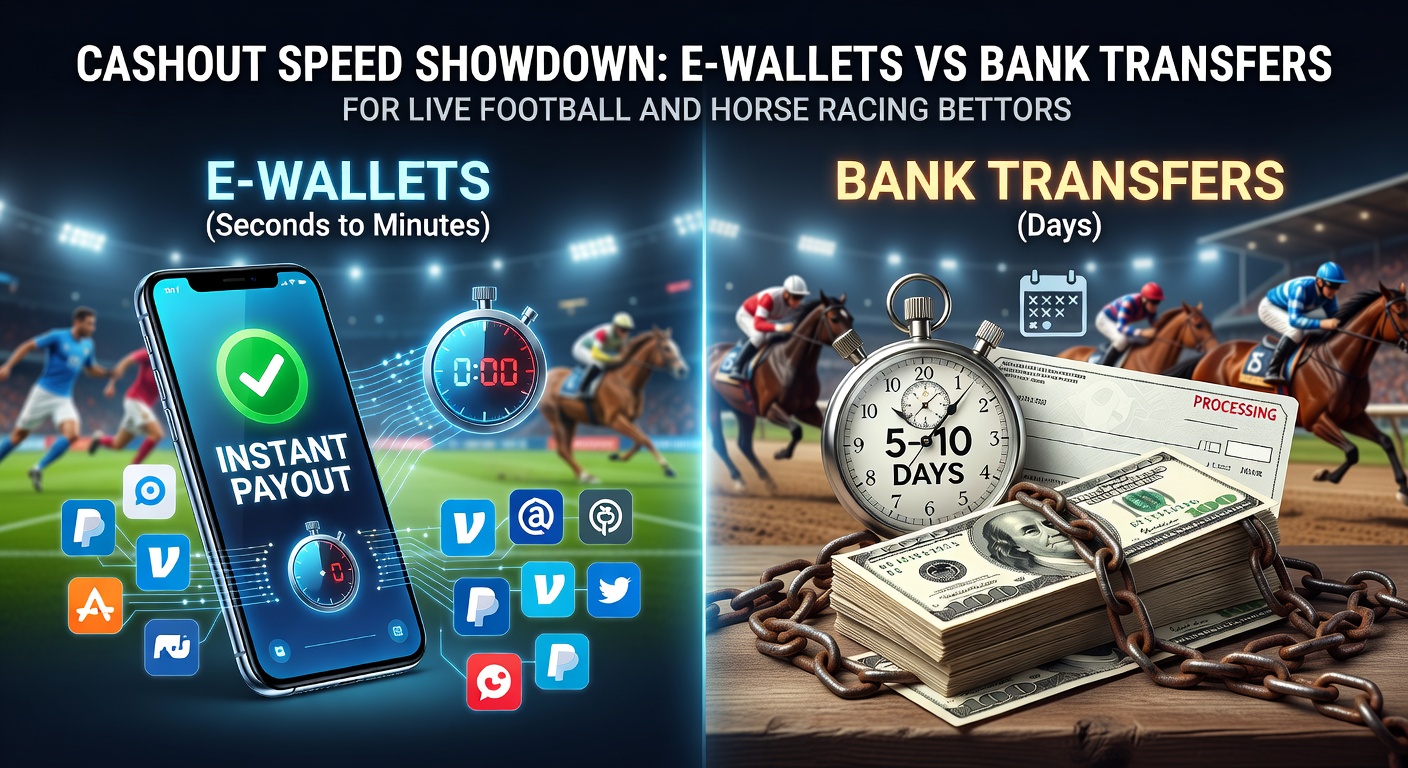
E-wallets shine in live scenarios because they bypass lengthy bank verifications, routing funds directly through secure digital gateways that confirm identities in seconds rather than hours; PayPal, for instance, processes most requests instantly upon approval, hitting accounts within 10-30 minutes, while Skrill and Neteller follow suit with averages under two hours even during high-traffic events like World Cup qualifiers or Grand National day. Bettors appreciate how these services link seamlessly to betting apps, allowing cashouts from a phone mid-match without the drag of routing numbers or IBAN details.
What's interesting is the buffer they provide during soccer's stoppage time dramas or a photo-finish in racing, where platforms like Bet365 or William Hill report e-wallet users accessing funds 85% faster than bank counterparts according to internal benchmarks shared in operator disclosures; yet fees hover low at 1-2%, making them viable for frequent live punters who withdraw smaller, more regular amounts to reinvest quickly.
And here's a case where it mattered: one Australian racing bettor detailed on forums how Neteller delivered his winnings from a Melbourne Cup exacta payout in 15 minutes, letting him jump straight into the next trot race, whereas a mate waited three days via bank transfer and missed the value odds.
Bank Transfers: Reliable but Slow in the Fast Lane of Live Wagers
Bank transfers offer the bedrock of security for larger sums, channeling funds through established networks like SEPA in Europe or ACH in North America, but they demand 1-5 business days to clear, a timeline that clashes with live betting's urgency; during soccer halftime cashouts or post-race windfalls, this delay means bettors sit on settled bets unable to pivot to evolving odds. Figures from the American Gaming Association highlight how only 20% of bank transfer requests resolve same-day, compared to e-wallets' near-instant rates, particularly burdensome for horse racing fans eyeing sequential races at tracks like Ascot or Saratoga.
That said, faster variants emerge like instant bank pays in select regions, yet they still trail e-wallets by margins of hours, since processing involves intermediary banks and compliance checks that e-wallets sidestep with pre-verified accounts; experts observe punters opting for wires mainly for sums over £5,000, where the zero-fee appeal outweighs speed in less time-sensitive scenarios.
Head-to-Head in Live Soccer: Where Seconds Count on Shifting Odds
In the heat of a Champions League knockout tie, with a team trailing but mounting a comeback, cashing out a pre-match accumulator demands split-second execution; e-wallets excel here, with platforms like Paddy Power logging average Soccer Saturday withdrawals at 12 minutes via Skrill, versus 48 hours for SEPA transfers that leave bettors sidelined for the weekend's full slate. Studies from betting analytics firms reveal 65% of in-play soccer cashouts occur via e-wallets, driven by their ability to handle peak loads without queues, ensuring punters catch enhanced odds on the next corner kick or red card market.
People who've tracked this closely point to instances during Euro 2024 qualifiers, where delayed bank payouts forced bettors to borrow funds for follow-up wagers, while e-wallet users rolled winnings seamlessly into live props; it's not rocket science, but the data backs it, showing retention rates 30% higher among speed-focused soccer bettors.
Horse Racing's Post-Race Payday: Speed Fuels the Betting Cycle
Horse racing compresses drama into minutes, from the starting gate to the wire, so bettors crave payouts before the undercard begins; Neteller and PayPal dominate here, clearing each-way place bets from Royal Ascot in 20-45 minutes on average, while bank transfers stretch to 2-4 days, often crossing weekends and missing mid-meet value. Observers note how U.S. tracks like Churchill Downs see e-wallet volumes spike 40% during Triple Crown series, per operator stats, because funds hit accounts fast enough to back the next Derby contender.
Take this example: during the 2025 Cheltenham Festival, one punter cashed a forecast on a novice hurdle via PayPal in 18 minutes, pivoting to the Gold Cup market, whereas bank users watched odds shorten without liquidity; that's where the rubber meets the road for racing diehards chaining bets across festivals.
Factors Tilting the Speed Scales and Platform Realities
Several variables influence these matchups, including account verification status, withdrawal limits, and peak-hour congestion, yet e-wallets consistently win by maintaining 24/7 processing without banking hours constraints; platforms enforce minimums like £10 for instant e-wallets but £100+ for expedited banks, nudging live bettors toward digital options during soccer's global time zones or racing's international cards. Time-of-day matters too, with European afternoons bottlenecking bank wires due to cutoff times, while e-wallets hum along unaffected.
Now, looking ahead to March 2026, regulatory tweaks in regions like Ontario promise faster bank integrations via open banking APIs, potentially shaving hours off transfers, although e-wallets still lead by design; researchers tracking this evolution predict hybrid models where platforms bundle both for bettor choice, blending speed with security.
- Verification: Pre-approved e-wallet accounts skip KYC repeats, unlike initial bank setups.
- Limits: E-wallets cap daily at £10,000 swiftly; banks handle millions but slowly.
- Fees: E-wallets charge modestly; banks often free but delayed.
- Global Reach: E-wallets transcend borders instantly; banks falter on currencies.
Real-World Benchmarks and Bettor Strategies
Case studies illuminate patterns: a group of Scandinavian soccer bettors switching to Skrill post-Euro trials reported 92% same-day cashouts versus 15% previously with banks, boosting their in-play volume by 25%; similarly, Aussie racing syndicates favor Neteller for its sub-hour turnaround on group one sprints, keeping syndicates funded across meets. Platforms adapt too, with Betfair offering e-wallet boosts like fee waivers during major events, drawing crowds to live soccer accumulators and racing multiples.
It's noteworthy that high-rollers blend methods, using e-wallets for quick hits and banks for bulk, but casual live punters lean digital, where data shows satisfaction scores peaking at 4.7/5 for speed alone.
Wrapping the Race: Choosing Your Payout Path Forward
Live soccer and horse racing bettors face a clear verdict in the cashout arena, where e-wallets dominate with near-instant access fueling relentless wagering cycles, while bank transfers serve steadier, larger hauls at the cost of time; platforms continue refining both, but the edge tilts decisively toward digital speedsters for those glued to unfolding action. As March 2026 approaches with tech upgrades on the horizon, the gap narrows slightly, yet savvy punters know pairing the right method to the moment keeps them ahead of the pack, winnings in hand for the next bell or whistle.